
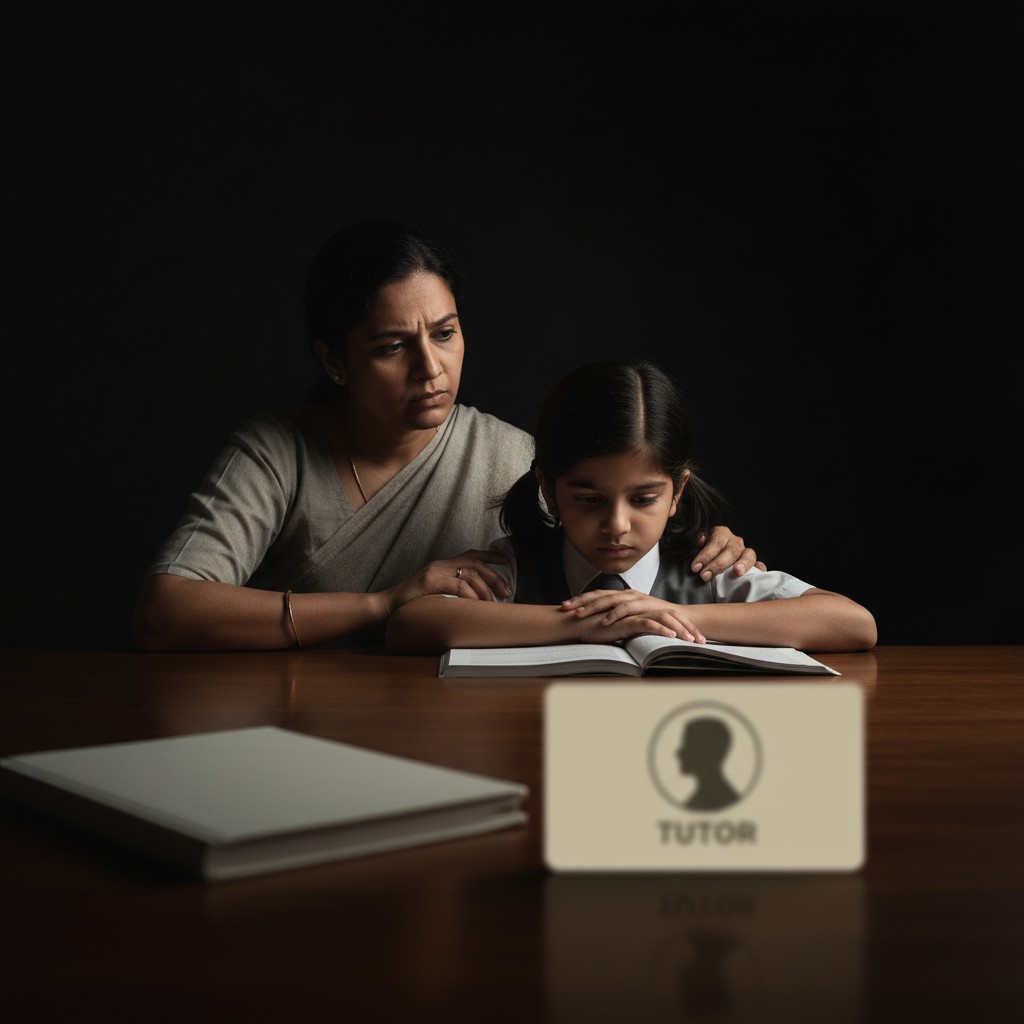
How to Handle a Tutor Your Child Doesn't Like
If your child dislikes tutor, learn calm, practical steps to fix the mismatch, improve learning, and choose verified tutors without stress.
How to Handle a Tutor Your Child Doesn't Like
When a child dislikes tutor, the issue is usually bigger than a simple personality clash. It can affect confidence, attendance, homework, and even family peace. The good news is that this problem can be handled calmly, without drama, if parents know what to watch for and how to respond.
Why this problem feels so stressful for Indian parents
For many families, tuition is not just a support service. It is an investment of money, time, and hope. So when a child dislikes tutor, parents often feel stuck between two worries: should they tolerate the situation because the tutor is experienced, or should they change quickly and risk starting over?
In Indian homes, especially in Patna, Ranchi, Varanasi, Lucknow, and similar Tier 2 cities, tuition often runs on trust and references. A neighbour recommends someone, an uncle shares a number, or a school parent forwards a WhatsApp contact. If the match fails, parents hesitate to speak up because they do not want to seem difficult, ungrateful, or wasteful. That hesitation can quietly damage a child’s learning routine.
The real pain point is not only dislike. It is the fear that your child will stop asking questions, avoid class, or lose interest in the subject altogether. In board-exam years, that fear becomes sharper. A tutor who cannot create comfort can make even a bright child shut down.
First, understand what the child is actually reacting to
Before you decide anything, pause and find out what your child dislikes tutor for. Sometimes the reason is very specific. The tutor may speak too harshly, move too fast, repeat lessons in a boring way, or dismiss questions. Sometimes the child feels embarrassed because the tutor points out mistakes in front of others. And sometimes the issue is not academic at all. It may be the time slot, the travel, the home environment, or simply a personality mismatch.
Children do not always express this clearly. A younger child may say, “I don’t like him.” A teenager may become silent, irritated, or start pretending to study. Parents should listen for patterns: does the child complain only before tuition, or does the mood stay low after class too? Is the child afraid of being corrected, or is the tutor genuinely not teaching well?
A useful way to think about it is this: there is a difference between uncomfortable but useful teaching and unproductive stress. The first may feel challenging but still helps learning. The second blocks it. Your job as a parent is to separate the two.
What parents commonly do wrong in this situation
One common mistake is forcing the child to “adjust” without checking whether the tutor is the problem. Parents sometimes say, “Be respectful, do not complain, just continue.” Respect is important, but so is emotional safety. If the child feels dismissed, they may simply stop sharing the truth.
Another mistake is changing tutors too quickly after one bad day. Every teacher has an off day. A child may dislike a tutor because the tutor gave homework, set discipline, or tested weak concepts. That does not automatically mean the tutor is bad. If parents switch too often, the child learns that discomfort always leads to escape, not improvement.
A third mistake is discussing the issue in front of the tutor in a blaming tone. That can make the tutor defensive and the child more uncomfortable. The better approach is a private, respectful conversation. Ask for observations, not apologies. The goal is to find a workable path, not win an argument.
Finally, many families rely only on informal arrangements, especially through WhatsApp groups or local agencies. In such setups, tutor quality can be uneven, replacement options may be limited, and commission-driven agencies often care more about closing the lead than ensuring a fit. In practice, this can lead to repeated mismatches and wasted fees.
How to talk to your child without making the issue worse
Choose a calm time, not immediately after tuition. Sit with your child and ask open-ended questions. Instead of saying, “Why are you being difficult?” try, “What happened in class today that made you uncomfortable?” Or, “What part of the tutoring session is not working for you?”
The important thing is to stay curious. Even if the child is exaggerating, the feeling is real. If they say the tutor talks too fast, is rude, or does not answer doubts properly, that feedback matters. If they say they just “feel bored,” dig deeper. Boredom may mean the pace is wrong, the method is too rigid, or the child is not getting enough practice-based engagement.
Parents should also reassure the child that speaking up is not disrespectful. Good learning depends on comfort, clarity, and trust. A child should not feel trapped with a tutor just because adults arranged it.
How to speak to the tutor professionally
Once you understand the child’s concern, speak to the tutor directly and politely. Do not open with complaint language. Start with appreciation, then mention the specific concern. For example: “We value your effort, but our child seems to be struggling with the pace and may need a little more explanation in certain topics.”
A good tutor will not take this personally. In fact, many experienced tutors welcome feedback because it helps them adapt. Ask whether they can slow down in tough chapters, add more practice questions, use simpler examples, or allow more doubt-clearing time. Sometimes one small adjustment changes the entire dynamic.
If the tutor becomes defensive, dismissive, or rude, that is important information. Professional tutors understand that teaching is not only about subject knowledge. It is also about communication, patience, and fit. In homes where the child feels intimidated, even strong teaching loses value.
When to give it time, and when to change the tutor
Not every mismatch needs an immediate switch. If the tutor is competent, respectful, and open to feedback, you may try a short adjustment period of one to two weeks. Track three things during that time: whether the child is attending willingly, whether doubts are being cleared better, and whether homework completion improves.
However, some signs should not be ignored. If the child feels scared, humiliated, or consistently unheard, change the tutor sooner. If the tutor regularly cancels, arrives late, ghosts classes, or keeps promising improvement without delivering it, do not keep waiting in hope. Reliability is a basic requirement, not a bonus.
Research on private tutoring in India consistently shows strong demand across school and exam preparation segments, with many families using tuition as a core support system. That is exactly why tutor selection matters so much. When the match is wrong, the loss is not only financial. It affects consistency, motivation, and board-exam confidence.
In cities like Patna and Ranchi, parents often know how hard it is to find a trustworthy home tutor who is both available and compatible. A small city may have capable tutors, but availability, travel distance, and personal reputation often decide the choice. That makes a structured search far better than random references.
A practical step-by-step approach for parents
Here is a simple method that works well for most families. First, observe the child’s reaction for a few sessions and note specific complaints. Second, speak to the child privately and calmly. Third, give the tutor one clear chance to adjust. Fourth, review whether the learning environment improved. Fifth, if the problem remains, replace the tutor without guilt.
This approach keeps emotions under control. It also teaches children an important life lesson: not every discomfort must be ignored, but not every discomfort should lead to panic. Good decision-making lies in between.
It also helps to document what you want in the next tutor. Do you need someone patient? Someone stronger in maths concepts? Someone experienced with CBSE board exam preparation? Someone available for evening sessions only? A clear checklist reduces future mismatch.
This is where verified platforms are useful. Instead of depending on random numbers from WhatsApp groups or commission-heavy agencies, parents can search for tutors whose profiles, subjects, availability, and experience are visible upfront. That reduces uncertainty and saves time.
💡 Key Tips
- Listen for the exact reason behind the dislike before deciding anything.
- Give a short adjustment window only if the tutor is respectful and willing to improve.
- Choose verified tutors with clear profiles, not just the cheapest or most convenient option.
Why verification matters more than ever
Many parents assume that if a tutor was recommended by someone, the risk is low. But recommendation alone does not guarantee fit. A tutor may be excellent for one child and a poor match for another. That is why verification, demo classes, and direct communication matter. They help you assess both competence and comfort before committing.
StudentsOn.in is built around this practical reality. Students and parents can explore free verified tutor options, and tutors pay only a flat Rs.20 per student lead with no commission cuts. That matters because commission-based systems often push quantity over quality. A better model is one that helps families make informed choices without hidden pressure.
For parents, this means less guesswork. For students, it means a better chance of finding someone who explains clearly, listens patiently, and builds confidence rather than fear.
Frequently Asked Questions
Should I force my child to continue with a tutor they dislike?
Only if the issue is a temporary adjustment and the tutor is otherwise respectful and effective. If your child feels consistently anxious, ignored, or humiliated, forcing continuation usually makes learning worse. The key is to identify whether the problem is discomfort with discipline or a real mismatch in teaching style and behaviour.
How many sessions should I wait before changing the tutor?
If the tutor is open to feedback, give a short trial of one to two weeks after you raise the concern clearly. But if there are signs of disrespect, repeated cancellation, or fear in the child, do not wait too long. A poor match can damage momentum quickly, especially during board exam preparation.
What should I look for in the next tutor?
Look for clear communication, patience, subject strength, and reliability. A demo class is very helpful. Ask about experience with CBSE, ICSE, or the relevant board, and confirm availability before starting. Verified profiles and honest reviews are far more useful than random phone numbers.
Closing thoughts for parents
If your child dislikes tutor, do not rush to blame the child, and do not assume the tutor is automatically at fault. Treat the situation as a fit problem that can be solved thoughtfully. A child learns best when the environment feels safe, structured, and respectful. That is true whether you live in Patna, Lucknow, Ranchi, Delhi, or Mumbai.
The goal is not just to finish homework. It is to build confidence, steady habits, and a healthy relationship with learning. If a tutor is not helping with that, it is okay to look for a better match. With verified options, free demo classes, and a no-commission model, StudentsOn makes that search simpler for families who want honest support without pressure.
Ready for a better tutor match?
If your current tutor is not the right fit, start fresh with a clearer checklist, a calmer conversation, and a verified search process. The right tutor can change everything: confidence, consistency, and results. And that difference matters in every household, especially when exams are near and stress is rising.
Frequently Asked Questions
Can a child and tutor personality mismatch really affect marks?
Yes. If the child stops asking questions, avoids sessions, or feels stressed during class, learning slows down. Even a strong tutor cannot help much if the child is mentally checked out. A good match improves participation, doubt clearing, and revision discipline.
Is a demo class enough to judge a tutor?
A demo class is a very useful first step, but it should not be the only one. It helps you see communication style, pace, and comfort level. After that, ask practical questions about syllabus coverage, board exam support, and how doubts are handled in regular sessions.
Find Your Perfect Tutor — For Free!
1000+ verified tutors on StudentsOn.in. Zero commission. No hidden fees. Start with a free demo class today.
👉 Visit StudentsOn.inFind a Free Tutor on StudentOn
Connect with verified home and online tutors across India. Zero commission. Free for students.
Visit StudentOn